Explore Our Courses
Live, cohort-based courses taught by scholars, artists, and practitioners. Small groups of 10-25 learners. Real dialogue. Deep transformation.
Radical Imagination: Visions for Liberatory Futures
Embark on a transformative two-day journey into radical imagination, discovering tools and methods that cultivate bold visions for liberatory futures and new worlds. This intensive, interactive workshop guides participants through personal mapping exercises, collective visioning sessions, and collaborative worldbuilding practices that center care, liberation, and lived experience. Together, we will co-create radical visions for justice-centered futures, exploring alternative ways of being and doing that challenge current systems and pave the way for the world we're birthing together.

The World on our Plates: Culture, Politics, and Food Systems
This course takes as its starting point something we all need in order to survive - food - and examines how the personal is entwined with the social and the political. It must be clear this is not a course on “clean” eating or dieting - rather, it aims to examine how our individual choices are shaped by the larger food systems around us. Together, we will examine the various systems and processes leading to the food that ends up on our plates - where it comes from, what it is made up of, who is involved in putting it together - to reflect on larger questions around culture, cuisine, and community. Figuratively speaking, we are less interested in the breaking of bread than in the actual baking of bread. That is to say, whilst the symbolic and cultural elements of food are generally known, this course aims to focus squarely on the material dimensions of how food is made. We will consider how questions around labour, migration, race & gender, coloniality, capitalism and the climate crisis are wrapped up in the production of food. Together, we'll consider how our choices around the food we consume are shaped by the larger social and political contexts we are a part of. We'll see how these contexts affect our lives - not just nutritionally, but socially and environmentally as well. Our weekly sessions will culminate in a bread-making workshop led by Josefina Venegas Meza, a professional baker & pastry chef who has worked in some of London's best kitchens. In addition to acquiring a practical and valuable skill, we intend this practise-based session to function as an opportunity to personally reflect on the various topics we've covered together, and how they might apply in our individual lives. You will also receive a comprehensive and exclusive bread-making handbook with all the essential information you might need to refer back to should you wish to continue baking in future.


Creative Activism for Kincentric Justice
This interdisciplinary course applies artistic and poetic inquiry to international law and earth jurisprudence with (at least) two intentions: 1) to decolonize carceral legal systems—to deconstruct systems of injustice constructed by colonialism, capitalism and the bureaucratic, legislative strategies and policies that uphold and perpetuate coloniality 2) to envision, imagine, speculate and weave webs of co-existence, co-becoming, and pluriverses of mutual thriving of people, land and sea; and to reformulate an ecocentric legal system that nourishes these worlds. The course will inaugurate our collective inquiry with the question, how can the dominant, criminal justice system be utilized to undo the carceral state that made it? And what can move the human-centric legal system towards an ecocentric law? The following seven weeks will be shaped by your questions, which might be: how can I make beauty with our plant kin to heal the wounds of colonialism? What if we sang with whales and flowers and microbes? What new worlds could we bring into being? worlds of mutual respect and relationality? How can I dance with microbes and mycellium to nourish a culture of reciprocity and an ethics of consent? Questions are the medicine that lead us into deep reflection and creation. Crafting questions hones our skills of deep listening. Following fish philosopher Zoe Todd’s call to center Indigenous laws and sovereignty, the course takes an unapologetically anticolonial approach to design and pedagogy/andragogy. The majority of resources will draw on Indigenous knowledge and culture-keepers, BIPOC elders and activists, and Rights of Nature advocates working in solidarity with Indigenous environmental activists. This course emerges from a generative fission between artistic process and jurisprudence to co-create protocols that disinvest from coloniality/modernity and bridge partitions between humans from “the rest of nature.” Students will learn with and participate in ecosocial justice movements through poetics, interdisciplinary arts, social sculpture, legislative action and/or narrative arts.

Imagine. A world without "international" development.
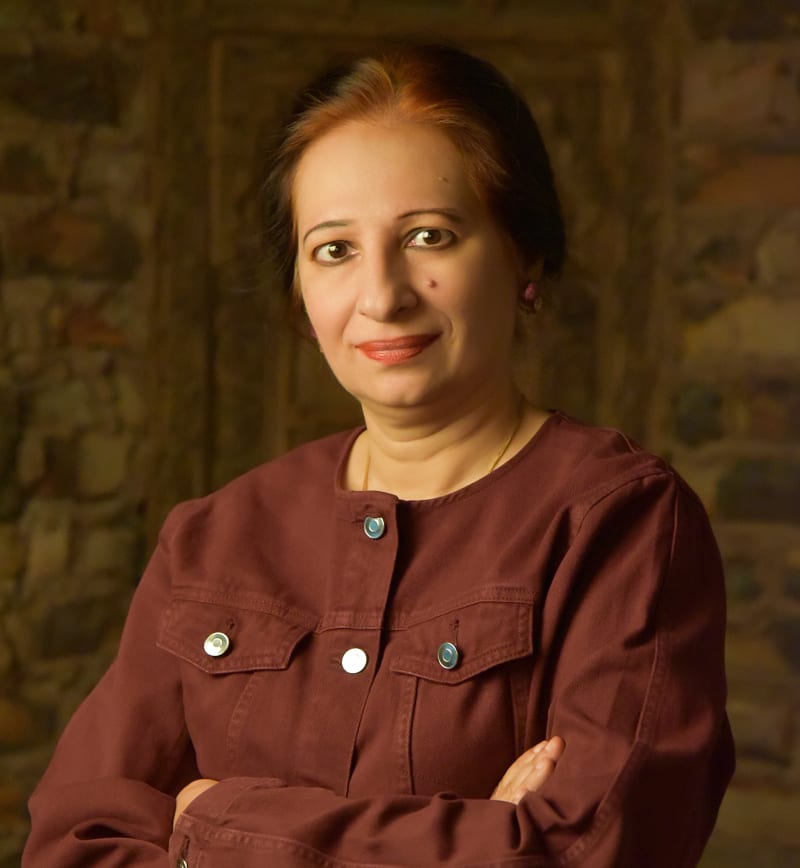
This course is a deeply personal journey into the ethical and moral dilemmas of my life and career working in international development, in my home country Pakistan as seen through nearly three decades of experience. Using my widely shared blog series Why I Left Development as a foundation, in addition to my subsequent writings on the critique of foreign aid, we will explore the contradictions, questions, and discomforts that arise when the concept of “doing good” collides with Western systems of power. But this isn’t just my story—it’s an invitation for you to reflect on your own. Whether you’re a practitioner, a social entrepreneur, an artist, or a funder, the course will ask you directly, "Am I part of the problem". Your answer will guide the trajectory of this course to help you move forward. Through personal reflections, we will interrogate where we began, the compromises we’ve made, and how we might begin again, with greater honesty and alignment, or maybe opt out completely. This course is not for the weak hearted. I will challenge you to look into your personal experiences and reflections about your work in ways that will create discomfort and doubt. But without this, there cannot be a “transformation”. Personally and professionally.

The Cyberpsychology of AI Creativity
This course explores the evolving relationship between human imagination and machine-generated creativity in the age of artificial intelligence. Starting with a psychological and philosophical grounding in human creativity and imagination, students will journey through the aesthetic, ethical, and labor dimensions of AI's impact on the creative process. Weekly sessions and guided practices blend theory, reflections, and discussions. Some hands-on experimentation with AI tools is explored later in the course. Throughout this course, we ask questions such as: - What defines creativity in a world of synthetic outputs? - Can machines truly co-create, or are they mimicking us? - Who owns creative labor in the age of algorithms? By interrogating these questions, students will leave equipped not just with technical knowledge, but with a critical, ethical, and imaginative lens on the future of creativity. Format: - 8 weeks, 90-minute live sessions - Weekly pre-readings or media viewings - Small group creative exercises - Final project or reflection

Find Your Voice
In this class, we unpack racial and generational trauma as a community, explore the roots of our identities, and learn to find our voices in a world that often wants to silence us. We retrace history to understand how modern society upholds white supremacy and causes extensive harm to BIPOC communities. Using that knowledge, we consciously move away from white models of success, learn how to become more comfortable with our identities, and re-design our life based on the values that matter most to us. We will also learn how to leverage our voice and power to organize in community and create the systemic shifts we need to usher in a better world. Topics covered: - Understanding systems of oppression and its effects on the present world order - How western imperialism rewrote the history of the world - The psychological damage of the white gaze on our identities and self-esteem - Reconnecting with our identity and reclaiming our voice, confidence, and power - Uncovering racial and intergenerational trauma to start the healing process - Dismantling the lie of meritocracy and white models of success and professionalism - Redefining success based on our own values and terms - Strategies to counter racism and uplift the most marginalized voices - Understanding how our liberation is connected and learning to create a network of allies - Making space for joy and internalizing that rest is an important part of liberation work


Beyond Sustainability: Connection, Wisdom, and Regenerative Leadership
We are living in a time when environmental conversations are often dominated by crisis, urgency, and fear. The narratives we hear most frequently focus on collapse, destruction, and emergency. While these realities cannot be ignored, constantly operating from this place can leave us feeling overwhelmed, drained, and powerless. What if there was another way to engage with this work? This course invites you to explore the environmental and sustainability space from a different perspective, one rooted in empowerment, connection, and renewal rather than stress and overwhelm. Over time, the sustainability field has increasingly been shaped by institutions, corporations, and NGOs. While many important efforts happen within these spaces, the deeper essence of environmental stewardship, the relationship between people, land, culture, and ancestral knowledge, can sometimes get lost. This course creates space to reconnect with that essence. Rather than approaching sustainability purely as an intellectual or technical subject, we will explore how to embody other ways of being that allow us to engage with the environmental field from a place of authenticity, care, and inspiration. Drawing from environmental psychology, behavioral change, storytelling, and ancestral wisdom, participants will explore how inner transformation can lead to more meaningful external impact. When we lead from this place, we are able to contribute to healthier systems while showing up with less guilt, less pressure, and more clarity, purpose, and power. By the end of the course, you will feel more empowered to engage with environmental work from a place of inspiration, grounded in a deeper connection to the land, to community, and to the wisdom that has guided humans for generations. Throughout the course, we will reflect on questions such as: - How can we engage with environmental work from a deeper, more life-affirming place that invites both ourselves and others into the conversation? - How can we move from intellectual understanding to embodied practice in sustainability? - How can personal transformation shape broader transformation in global systems? - How can we design and share initiatives, ideas, or projects that emerge from inspiration and authenticity rather than pressure or urgency? - How can we lead and communicate in ways that reconnect people to the land and to each other?

Living with Imagination and Optimism
Imagine having the courage to think and act more authentically, letting go of expectations. Imagine living each day your dream life and with a clear purpose. Imagine becoming the most influential leader because of your compassion and ethics. Imagine that your seemingly wild ideas are instrumental to addressing climate disasters. This is possible if you dare to imagine it. Imagination is human’s superpower – it allows to see beyond current limitations to create unseen and hopeful realities. Optimistic imaginings can increase positive emotions, boost well-being, and lead to empowerment, fostering constructive individual and collective change and impactful action. However, imagination is still mostly associated with children and artists, but unrelated to everyday adult life. As a result, our imagination has become constrained and underdeveloped. While we spend most of our time thinking about the future, our tendency is to imagine apocalyptic scenarios – e.g., worse pandemics – or negative situations rooted in current trends – e.g., AI takes over humanity. We struggle to imagine positive paths forward and often look at others for validation – that is, we follow the familiar and conventional, even if this path does not make us happy. This creates a vicious cycle of pervasive pessimism and hopelessness about the future that increases our insecurities and feelings of anxiety and loneliness, which hinder our imaginative powers. The good news is that imagination can be reclaimed, strengthened, and harnessed. Sitting at the intersection of psychology, neuroscience, and well-being, this course is an invitation to explore the symbiotic connection between imagination and well-being, as well as to discover what is getting in between us and reaching our potential. In addition to inner development gains, reinforcing human skills — listening, imagining, conversing, empathizing, paying attention, collaborating — will better equip learners to succeed as employees are increasingly looking for these skills in candidates. Through a blend of mindfulness-based practices and reflection, experiential exercises (visualization, role-play, futuring, pretend play, sensory engagement), and hands-on creativity activities (drawing, sketching, collaging) learners will journey inwards, slow down, identify their barriers, and experience the transformative benefits of imagination for mental and physical health. In each session, learners will practice tools and skills to unlock their barriers and deliberately tap into their imagination as well as to integrate and foster imagination skills in their life, their community, and their work. By the end of the course, learners will feel a sense of freedom, courage, compassion, and optimism. They will walk away with the inspiration and confidence to live with imagination – and to nurture it in others.

Designing for Liberation: Tools, Methods, and Pathways for Just Futures
This course is an invitation to imagine and build equitable, liberatory futures – starting with ourselves. Rooted in decolonial, feminist, and community-based knowledge systems, learners will examine their positionality, power, and purpose in today’s world, exploring how personal transformation can lead to systemic change. Unlike traditional leadership or social change programs, this course blends deep self-inquiry with real-world application, integrating inner-led transformation, trauma-informed practices, and the power of storytelling, imagination, and joy as tools for liberation. Together, we move beyond critique and into visionary practice – grounded in care, hope, and solidarity.

Embodying Liberation
This course offers a transformative journey into embodied resistance and collective healing. Developed under siege and exile, Ashira Active Meditation draws from Sufi whirling, somatic release, and indigenous Palestinian practices to support healing from trauma on both personal and collective levels. Participants will: - Explore how continuous trauma shapes the nervous system - Learn how the body can be a site of both memory and liberation - Engage in movement practices, grief rituals, and storytelling - Reclaim joy as a form of resistance Guiding Questions: - How do we grieve while building resilience? - How can our bodies become vessels for transgenerational healing? - What does it mean to be radically alive in times of collapse? This course centers voices from SWANA and global majority communities, offering tools that are culturally rooted, somatically empowering, and spiritually sustaining.

Capitalism vs. Love
An exploration of the fundamental tension between capitalist logic and our human need for love, connection, and community. This course examines how economic systems shape our personal lives including our identities, bodies and relationships, and how we can reclaim love as a revolutionary force.

Want to teach with us?
We're always looking for educators who are passionate about liberation, justice, and transformation. Set your own topics, pricing, and schedule.
Apply to TeachJoin our mailing list
Stay updated on new courses and events.