The Cyberpsychology of AI + Creativity
What happens to your creativity when AI enters the process? Through course discussion and various reflections, you’ll examine how AI may influence your imagination, judgment, authorship, agency, and creative confidence. This course helps you understand how AI can both expand and constrain your creative process, and how to engage with it while keeping your creativity distinctly your own.
Course Overview
This course explores the evolving relationship between human creativity and artificial intelligence, with particular attention to what happens to our thinking, imagination, judgment, and sense of authorship when AI enters the creative process.
Beginning with psychological and philosophical perspectives on human creativity and imagination, students will explore the tensions and dimensions emerging around AI-assisted creativity — from agency, effort, and creative confidence to originality, ownership, ethics, and the changing nature of creative labor.
Weekly sessions blend theory, guided reflection, discussion, and experiential exercises designed to help participants examine not only what AI can produce, but how interacting with AI may shape the human creative process itself.
AI tools may be incorporated for experimentation and inquiry, but this is not a course about prompt engineering, mastering generative tools, or learning a particular creative platform. The emphasis remains on the human side of creativity.
Throughout this course, we ask questions such as:
What defines creativity in a world increasingly populated by synthetic outputs?
What happens to creative agency and judgment when AI becomes part of the process?
How might AI expand creativity while simultaneously introducing new constraints, dependencies, or trade-offs?
Who owns creative labor, and what does authorship mean, in the age of algorithms?
By interrogating these questions, students will leave with a richer psychological, critical, and ethical framework for understanding AI's evolving role in human creativity—and greater awareness of their own relationship with AI as creative thinkers and makers.
Format:
4 weeks, 90-minute live sessions
Short readings, excerpts, and media explored together during class
Small-group discussions, reflections, and creative exercises
Culminating reflection and integration
Optional resources for those who want to explore further
Who Is This Course For?
1) Creatives & Artists Navigating AI
Writers, designers, illustrators, poets, visual artists, and other creative practitioners interested in how AI is changing creative thought, process, authorship, and artistic decision-making. Whether curious about AI or already experimenting with it, participants explore these changes through the psychology of human creativity rather than through software instruction or tool demonstrations.
2) Students, Educators & Early-Career Professionals Across the Arts, Media & Humanities
Undergraduate and graduate students, educators, researchers, and early-career professionals in fields such as visual arts, creative writing, media, communication, psychology, philosophy, and related disciplines. The course explores contemporary questions surrounding originality, authorship, creative agency, human–AI collaboration, and the changing meaning of creativity.
3) Curious Professionals & Lifelong Learners Exploring the Future of Creativity
Adults and professionals interested in creativity, psychology, culture, ethics, and emerging technology. No technical background is required. The course creates space to examine larger questions such as: What is creativity? How does technology shape creative thinking? What changes when AI becomes part of the creative process?
What You'll Learn
- Critically explore the psychological foundations of human creativity and understand key theories from humanistic and cognitive psychology to ground creative expression in a human-centered framework, independent of technology.
- Explore how imagination fuels creativity and how both intersect with philosophical and psychological aesthetics, enabling students to articulate nuanced distinctions and understand the mechanized interpretations of these constructs in the context of AI
- Analyze the concept of “synthetic creativity” and how generative AI simulates creative processes
- Develop ethical awareness around AI as a creative collaborator or surrogate
- Experiment with prompt engineering as a creative, iterative craft
- Evaluate the sociocultural and economic impact of AI on creative labor
What's Included
Live Sessions
Interactive classes with your instructor
Session Recordings
Lifetime access to all recordings
Community Access
Connect with fellow learners
Certificate
Proof of course completion
Course Modules
The Psychology of Human Creativity (Before AI)
What is human creativity when stripped of technologies and algorithms? What lives at the core of the imaginative act? This week builds a sacred ground. It’s an invocation of the imaginative self — without machines, automation, or any AI. It is only from this centered human place that we can begin to question what’s being automated, simulated, or co-opted when machines “create.”
The Mind’s Eye: The Psychology of Human Imagination
This week explores imagination as a foundational psychological capacity distinct from creativity, while understanding its role in perception, memory, future thinking, emotional regulation, and meaning-making. Students will analyze imagination’s function across different psychological theories and reflect on its relevance to inner life, artistic expression, and even survival.
Philosophical vs. Psychological Aesthetics
Philosophical aesthetics tells us what beauty and art mean; psychological aesthetics tells us how beauty and art are experienced. To understand human (and machine) creativity, we need both.
Synthetic Creativity: Artifice, Autonomy & Algorithmic Output
This week pivots the class from examining human creativity (Weeks 1–3) to confronting the notion of synthetic creativity—a term that invites us to wrestle with questions of authorship, authenticity, process, copyright, and meaning in machine-generated outputs.
The Creativity Crisis: "Are We Being Replaced?"
This week tackles the psychological, economic, and philosophical anxiety surrounding generative AI’s role in creative labor. We explore the rise of AI-generated art, the contested idea of “machine creativity,” and the real-world implications for artists, designers, illustrators, and visual creatives. We center class discussion around labor, including who gets paid, who gets displaced, and who owns creativity in the age of machine-made content.
Exploring Co-Creation I: Prompt Engineering as Creative Craft
Prompt engineering is rich enough to merit its own deep-dive because it embodies the craft of collaboration with machines, not just the output. Separating it from the broader topic of AI-human collaboration allows students to first build technical and conceptual fluency with generative systems before tackling the relational, ethical, and expressive dimensions of full-spectrum collaboration.
Exploring Co-Creation II: Human-AI Collaboration
Week 7 explores the possibilities of human-AI co-creation through hands-on experimentation with generative tools for text, image, and video. Students will engage with prompt engineering as a creative craft, reflecting on authorship, voice, and collaboration. Activities include generating AI-assisted poetry, visuals, and short video clips, followed by critical discussions on ethics and aesthetics. The week culminates in a creative reflection project showcasing their collaborative work.
Reflections, Projects, and Forward Paths
In our final session, we turn inward and outward—creating space for personal reflection, peer exchange, and shared growth. Students will present either a brief final project (up to 10 minutes) or share their reflections on what they’ve learned, how their perspectives on creativity and AI have evolved, and what they plan to do with these insights.
Real-World Project
Exploring Co-Creation I: Prompt Engineering as Creative Craft
Prompt engineering is rich enough to merit its own deep-dive because it embodies the craft of collaboration with machines, not just the output. Separating it from the broader topic of AI-human collaboration allows students to first build technical and conceptual fluency with generative systems before tackling the relational, ethical, and expressive dimensions of full-spectrum collaboration.
Students will learn how word choice, structure, and specificity shape the outputs of AI models.
Through hands-on activities, they will explore prompt crafting as a form of authorship,
storytelling, and design thinking.
Learning Objectives
- Analyze the relationship between prompt design and AI-generated output.
- Compose effective, stylistically rich prompts across modalities (text, image, video).
- Use revision and iteration to improve prompt specificity and expressive intent.
- Understand prompt engineering as a form of authorship and aesthetic direction.
- Identify ethical considerations in the language and references used in prompting.
Session Schedule
About the Instructor
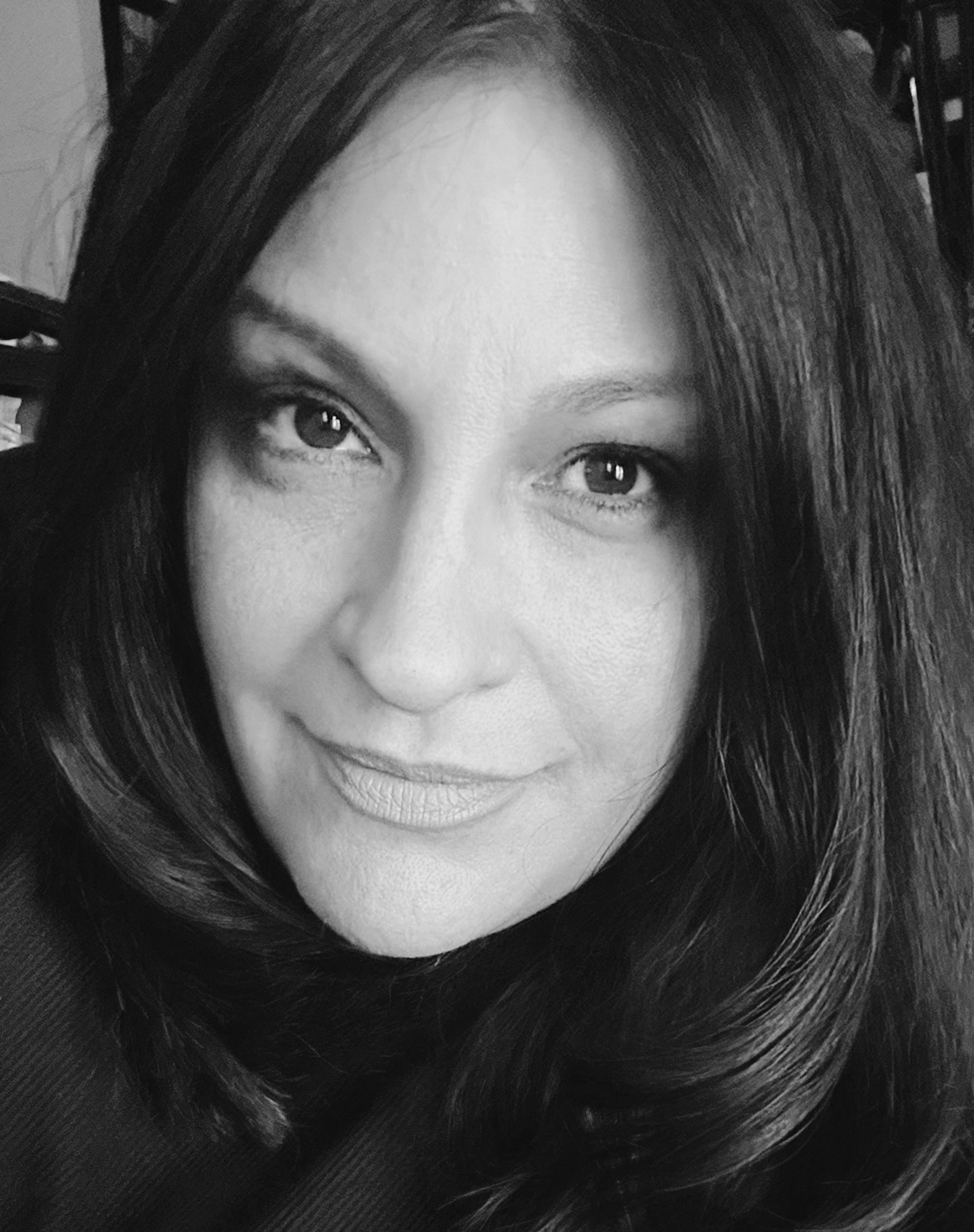
AI Psychologist • Creative Intelligence • Visuality Coach
Mayra Ruiz-McPherson is a psychological futurist, psychoeducator, creative technologist, and visual artist whose work explores the evolving relationships among human psychology, creativity, and emerging technology. As Founder and Executive Director of The CyberPsych Institute, her research and teaching focus on AI psychology, cyberpsychology, human–AI interaction, and the psychological dimensions of our increasingly technological lives. Her multidisciplinary perspective is also grounded in creative practice. With graduate training spanning psychology, media, and fine art, Mayra brings decades of experience across technology, visual communication, design, storytelling, and creative practice. As a trained visual artist, she approaches questions about AI and creativity not only through psychological science and critical inquiry, but from the lived perspective of someone who creates, experiments, and continually negotiates the relationship between human imagination and technological tools. Across her teaching, Mayra combines psychological and creative perspectives to invite thoughtful inquiry into authorship, agency, originality, creative judgment, and the ways technologies can both expand and constrain human possibility. Rather than centering particular tools or trends, her approach encourages students to examine their own relationship with AI and develop a more intentional, critically informed understanding of what creativity means in an increasingly AI-mediated world.
Frequently Asked Questions
$600
Stay informed about this course and future offerings.
Having issues or questions? Contact us
October 11
20 students max
4 sessions
90 min each
You Might Also Like
Relational Leadership as Design
Beyond Sustainability: Connecting Deeper to the Environmental Conversation

Creative Responses to Climate Collapse: Worldmaking with Art & Literature