Tending to the Roots of Conflict in a Divided World
Deepen your capacity to unearth and tend to the unconscious beliefs, protective patterns, and survival strategies at the root of conflict, division, dehumanization, and polarization.
Course Overview
Extended enrollment ends Sunday, Oct 4th.
Our first class is Tuesday, Oct 6th.
Most approaches to conflict and systemic harm focus primarily on cultural context and external circumstances, without truly addressing the deeper fears and desires that keep these larger conditions in place.
Through a trauma-informed process of guided self-inquiry and embodied exploration, participants in this course will gain a personally transformative, in-depth understanding of the ways in which self-suppression and inner fragmentation create and sustain the oppressive systems that inform personal and collective conflict.
By illuminating how these hidden patterns shape our sense of self, our relationships with others, and the wider web we all belong to, you’ll gain invaluable insights into the unconscious drivers of division while nurturing your ability to address the roots of conflict in your life and in our world.
Civil rights activist James Baldwin famously said, “I imagine one of the reasons people cling to their hatred so stubbornly is because they sense, once hate is gone, they will be forced to deal with pain.”
Unless we create the conditions that allow us to courageously confront that pain, we risk creating more of the same. Understanding what happens within us builds our capacity to interrupt what is unconsciously reproduced around us—and makes it possible to imagine and create something different for generations to come.
Who Is This Course For?
This course is designed for heart-centered, purpose-driven peacebuilding practitioners, humanitarians, educators, cross-cultural mediators, bridge-builders, activists, creatives, changemakers, and movement leaders.
What You'll Learn
- Unearth unconscious beliefs, protective patterns, and survival strategies that perpetuate division and dehumanization
- Identify how internalized oppression operates in your life and leadership—and how it sustains larger systems of harm
- Develop a deeper understanding of how inherited trauma impacts our minds, bodies, relationships, and sociocultural norms
- Challenge rigid binaries (us/them, good/evil, oppressed/oppressor) and patterns of othering that perpetuate blame and sustain conflict—without bypassing your own moral clarity and conviction
- Expand your capacity to engage conflict with greater emotional depth, accountability, and relational awareness
- Translate personal awareness into context-sensitive approaches for facilitating dialogue, repair, or reconciliation on a wider scale
What's Included
Live Sessions
Interactive classes with your instructor
Session Recordings
Lifetime access to all recordings
Community Access
Connect with fellow learners
Certificate
Proof of course completion
Course Modules
LAYING THE FOUNDATIONS FOR THIS WORK (OCT 6)
In our first session, we’ll begin to get to know one another, co-create our community agreements, review the approach and process we’ll move through in the following weeks, and set personal and collective intentions for this experience. This session will set the foundation for the work we’ll do together: examining the recursive relationship between self-suppression and systems of oppression, i.e. how the disconnect within becomes the divide between, and vice versa.
BLOOD, BONES, & BIOLOGY: INHERITED TRAUMA (OCT 13)
In week 2, we explore the role of the body in our relationships with ourselves, each other, and the wider world around us. We examine how epigenetics, historical, intergenerational, and personal trauma, and our nervous system patterns become stored in the memory of our cells, blood, and bones. We unpack how our biology can play a significant role in limiting our capacity for connection, navigating conflict, and remaining open to dialogue in the face of perceived threat.
SELF-SUPPRESSION AND THE CONFLICT WITHIN (OCT 20)
This week, we unpack the way pieces and parts of us become denied or disowned through the internalization of social norms and cultural conditioning, creating a conflict between who we really are and how we present ourselves to the world. We consider how the shadow—the aspects of ourselves we are not consciously aware of—governs our lived experience, including the beliefs we hold about ourselves and others, the protective patterns that show up in our relationships, and the survival strategies we employ to stay safe in an unjust world.
PROJECTION AND THE CONFLICT BETWEEN (OCT 27)
In week 4, we explore how unconscious beliefs and behaviors, which live and breathe through biology, shape our relational dynamics and patterns. We examine the role projection plays in judgement, resentment, blame, and how it holds up a mirror to the pieces and parts of us that have been denied or disowned through our sociocultural programming. This module will highlight how unresolved patterns get repeated in our relationships, how the externalization of inner conflict can contribute to power-over dynamics, and what’s required to break the cycle.
OTHERING, DEHUMANIZATION, & COLLECTIVE CONFLICT (NOV 3)
This week we begin to translate the micro into the macro—small is all. We explore how our biology, shadows, and relational dynamics become the field from which dehumanization, demonization, and othering emerge. We consider historical examples and case studies of large-scale conflict in the world and how they reflect the same patterns that show up within and between us on a small-scale. Together, we’ll examine how cycles of harm can be repeated across generations and why the abused sometimes becomes the abuser, or how the oppressed can, under certain conditions, go on to replicate and reproduce the oppression they've experienced.
COMPASSION, ACCOUNTABILITY, & JUSTICE (NOV 10)
In week 6, we begin to unpack the big questions that arise from this work. Together, we explore the terrain between and beyond binaries—us/them, good/bad, oppressed/oppressor—that oftentimes unsettling space where nuance and complexity collide with moral clarity and conviction. We consider the role of compassion in conflict, not to justify injustice, but to deepen our understanding of its origins and what is required for its resolution. We’ll explore accountability and responsibility in the context of harm, and draw parallels between our personal experiences and the broader dynamics of oppression on a collective scale.
REAL-WORLD APPLICATIONS & IMPLICATIONS (NOV 17)
What do we do with all we’ve come to understand? This week, we consider the real-world applications of the insights that have emerged through this experience. We will explore how we can translate our personal awareness into context-sensitive approaches for facilitating dialogue, repair, or reconciliation in our lives as well as on a wider scale. How might a deeper understanding of biology, shadow, projection, and the dynamics of conflict inform the ways we approach mediation, bridge-building, and other efforts to create meaningful change?
BREAKING CYCLES TO BUILD BETTER FUTURES (NOV 24)
In our final gathering, learners will share their personal projects and together, we’ll reflect on overall learnings, identify our key takeaways, and set intentions for how we’ll carry this work forward in our lives and leadership. We’ll return to the central question of the course: how do we break cycles of harm in the micro and the macro to build the world and future we envision?
Real-World Project
Participants will create a final integration artifact that bridges personal insight with collective understanding and application.
Through a medium of your choice (e.g., written essay, audio recording, social media / blog post, collage, etc), you will explore a previously suppressed, hidden, or disowned aspect of yourself and examine how it shapes:
Your internal experience (beliefs, protective patterns, survival strategies)
Your relationships (communication, conflict, projection, or repair)
Your understanding of larger systems (how this pattern shows up in collective dynamics around power, oppression, othering, or polarization)
You will identify and share how you intend to interrupt, transform, or work differently with this pattern in your own life and leadership, and why that matters for the world you are committed to creating.
Session Schedule
About the Instructor

Award-winning educator and leadership coach working at the intersection of personal and collective liberation
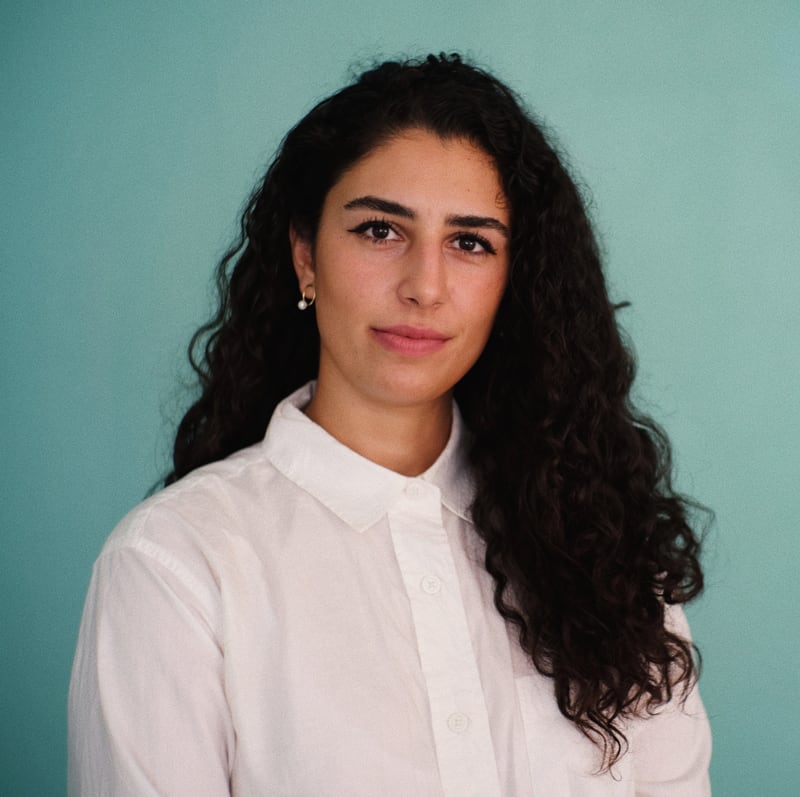
As a first-generation Greek-American with a family history shaped by war, genocide, and forced displacement, I completed my M.A. in cultural anthropology with a research focus on the role of identity, religion, and nationalism in the context of war and conflict. For nearly 20 years, I’ve explored the intersections of global citizenship education, cross-cultural community building, leadership development, and personal trauma resolution, guiding individuals and groups around the world to address inner and outer conflict with curiosity, courage, and compassion. After my ancestors began coming through to me in late 2023, my world-building work began to highlight the recursive relationship between self-suppression and systems of oppression—how the disconnect within becomes the divide between (and vice versa). My approach is human-centered, trauma-informed, and reflects a unique blend of my background in sociology, psychology, cultural anthropology, intercultural education, leadership development, life coaching, and somatic trauma resolution. I’ve been recognized for my commitment to personalized learning experiences and successful efforts in humanizing communities.
$800
Stay informed about this course and future offerings.
Having issues or questions? Contact us
October 6
15 students max
8 sessions
120 min each